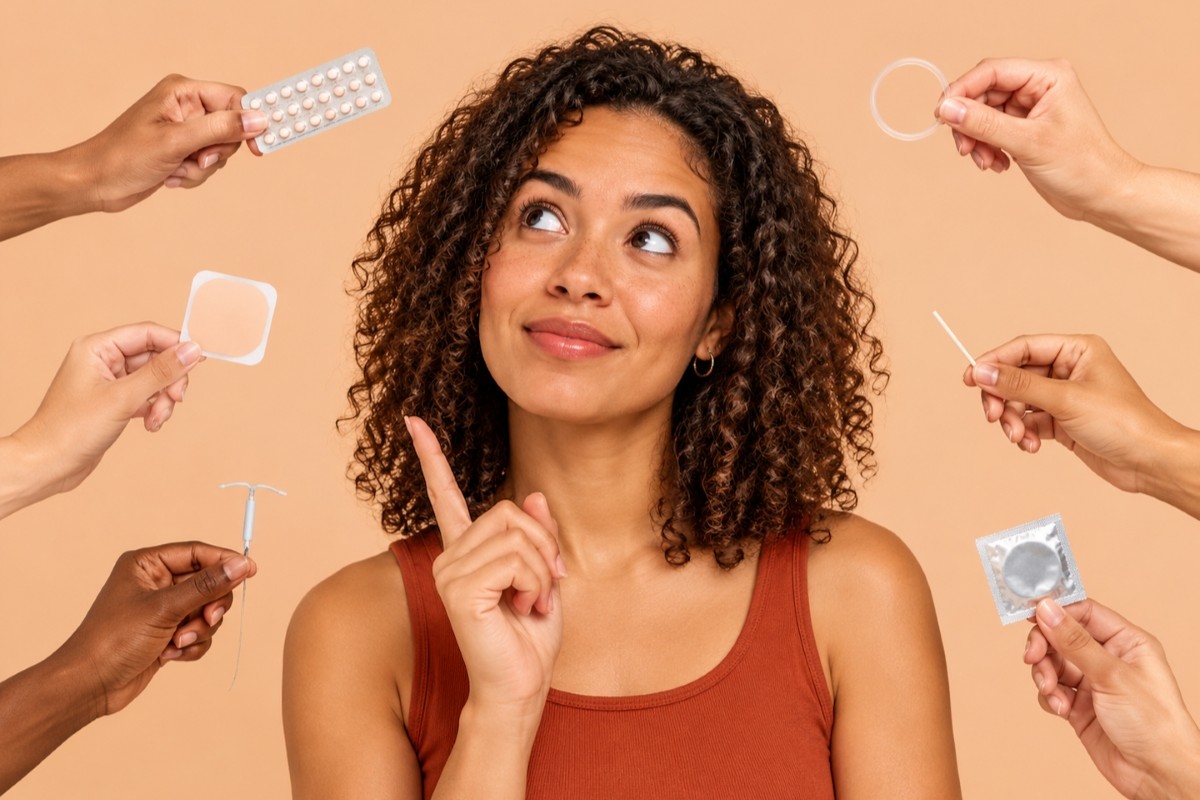
There is no single best birth control. Every method available today prevents pregnancy when used correctly, so the right one comes down to your plans for having children, how you feel about hormones, your health history, and what you are willing to remember to do. This guide can help you decide.
Start with your timeline: do you want kids soon, in a few years, or never?
Your answer narrows the field fast. If you might want a pregnancy within a year or two, choose a method that stops working when you stop the birth control: the pill, patch, ring, condoms, or an IUD that can be removed at any visit.
If children are several years away, a long-acting method saves daily effort. A hormonal IUD lasts 3 to 8 years depending on the type, a copper IUD up to 10, and the arm implant (Nexplanon) about 3 years. All can be removed early if plans change.
If you are done having children or certain you do not want them, permanent options are worth a conversation. For women this means tubal ligation or removal of the fallopian tubes; for male partners, a vasectomy, which is a simpler procedure.
Hormonal or non-hormonal birth control: which is right for you?
Hormonal methods use progestin alone or progestin with estrogen, and they often make periods lighter and more predictable. Combination methods with estrogen (most pills, the patch, the ring) are not recommended if you smoke and are over 35, have migraine with aura, have had a blood clot, or have uncontrolled high blood pressure. Progestin-only methods, including the hormonal IUD, implant, shot, and mini-pill, avoid those estrogen risks and are an option for most people who cannot take estrogen.