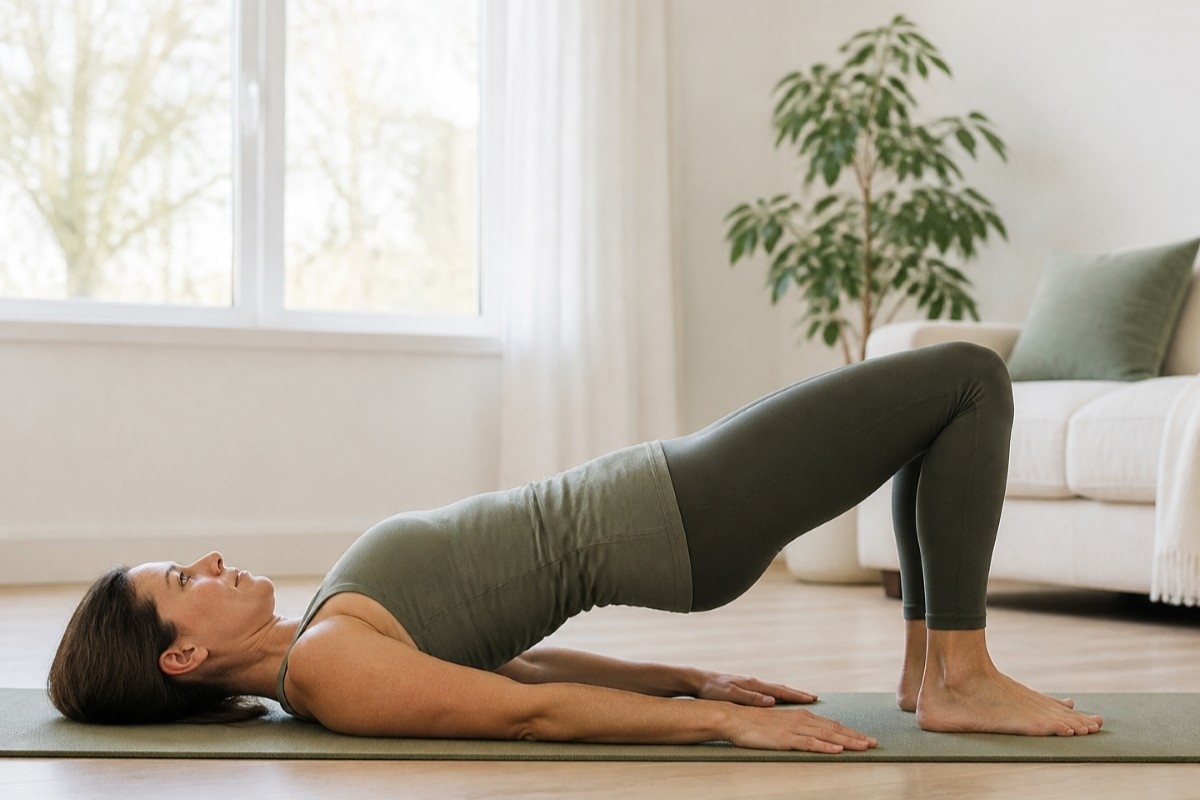
The pelvic floor is a hammock of muscle and connective tissue that stretches from your pubic bone to your tailbone. It holds up the bladder, uterus, and rectum, controls when you urinate and pass stool, and plays a big role in sexual sensation. When the pelvic floor weakens, it cannot perform those functions as well. Pregnancy and childbirth are the most common causes, but menopause, chronic constipation, heavy lifting, a long-term cough, and getting older all wear on it. This muscle group responds to training at every age.
Weak pelvic floor symptoms in women
Leaking urine when you cough, sneeze, laugh, or jump is the classic sign, and it is not something to accept as normal. A sudden, hard-to-hold urge to urinate is another. Some women notice they cannot fully stop the stream, need to strain to empty their bladder, or lose gas or stool without meaning to. Painful sex or less sensation during sex can also trace back to the pelvic floor, sometimes because the muscles are weak and sometimes because they are too tight and cannot relax. Both problems are treatable.
Signs of prolapse
Pelvic organ prolapse happens when the pelvic floor can no longer hold the bladder, uterus, or rectum in place and one of these organs drops into the vagina. The most common description we hear is a feeling of heaviness or pressure in the pelvic area, or the sense that something is falling out, especially at the end of the day or after standing for a long time. Some women feel or see a bulge at the vaginal opening. Other clues are difficulty emptying the bladder or bowels and low back ache that eases when you lie down. Prolapse is very common after childbirth and after menopause, it is rarely dangerous, and mild cases often improve with the exercises below.
Pelvic floor exercises for women: Kegels and beyond
A Kegel involves squeezing and lifting the muscles you would use to stop passing gas, held for a few seconds, then fully relaxed. Finding the right muscles is the hard part. Your belly, thighs, and buttocks should stay soft, and you should keep breathing. Many women squeeze the wrong muscles for years.