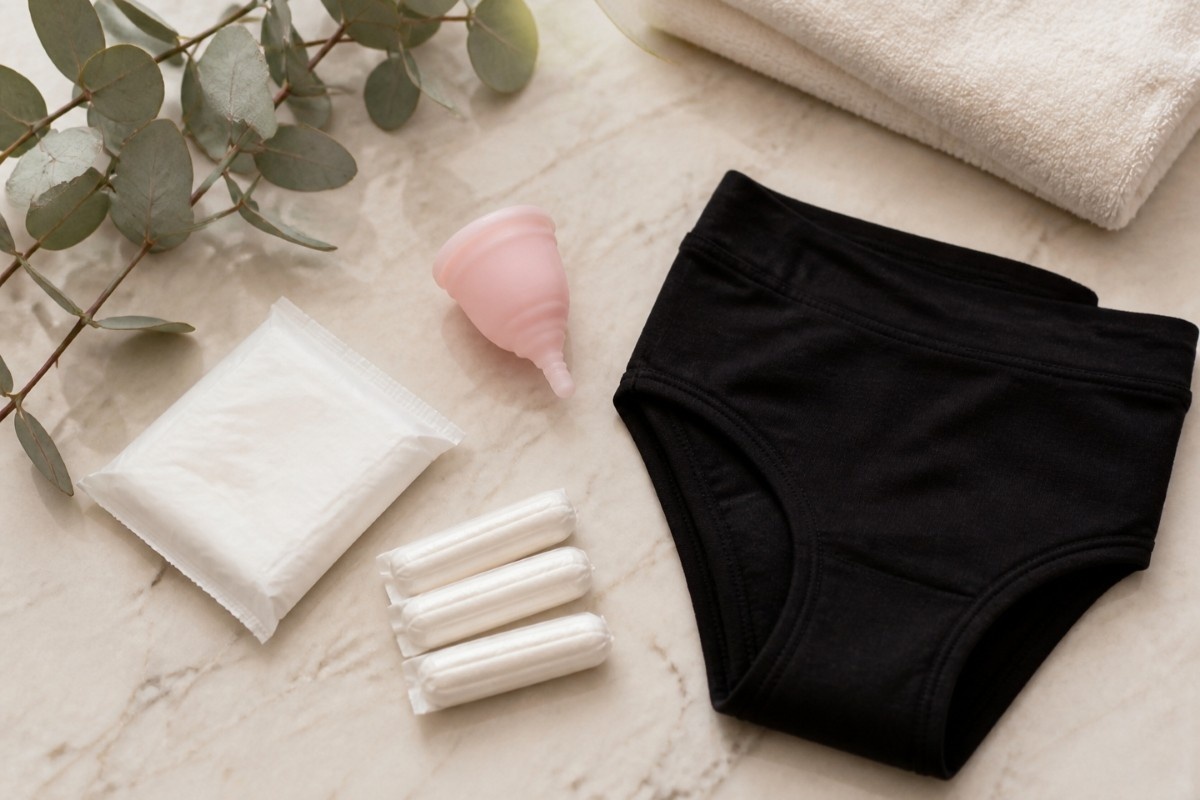
Period products fall into two groups: those that catch blood outside the body, like pads and period underwear, and those that collect it inside, like tampons, menstrual cups, and discs. None is medically better than the others. The right choice depends on how heavy your flow is, what you do during the day, how your body feels with each one, and how much money you want to spend. Many women end up using two or three, switching by day of the cycle, and that is a perfectly good plan.
How long can you leave a tampon in?
Change a tampon every four to eight hours, and never leave one in longer than eight hours, including overnight. The reason is toxic shock syndrome, a rare but serious infection caused by bacteria that can grow on a tampon left in too long, especially a high-absorbency one on a light day. The rule that prevents it is simple: use the lowest absorbency that lasts about four hours, and change on schedule. Fever, a sunburn-like rash, vomiting, or dizziness while using a tampon means take it out and seek care right away.
If a tampon hurts going in, feels like something is blocking it, or leaves you dry and irritated, mention it at your next visit. Pain with insertion can point to vaginal dryness, tight pelvic floor muscles, or endometriosis, and each of these has a fix.
Can tampons or pads cause a UTI or yeast infection?
Not on their own, but they can set the stage. A pad that stays damp for hours traps warmth and moisture against the skin, which favors yeast, and scented pads or tampons can irritate sensitive tissue and throw off the vagina’s natural balance. Tampons do not cause urinary tract infections, since they sit in a separate passage. If you get itching, burning, or unusual discharge around your period every month, switch to unscented products, change more often, and let your provider check whether something else is going on.