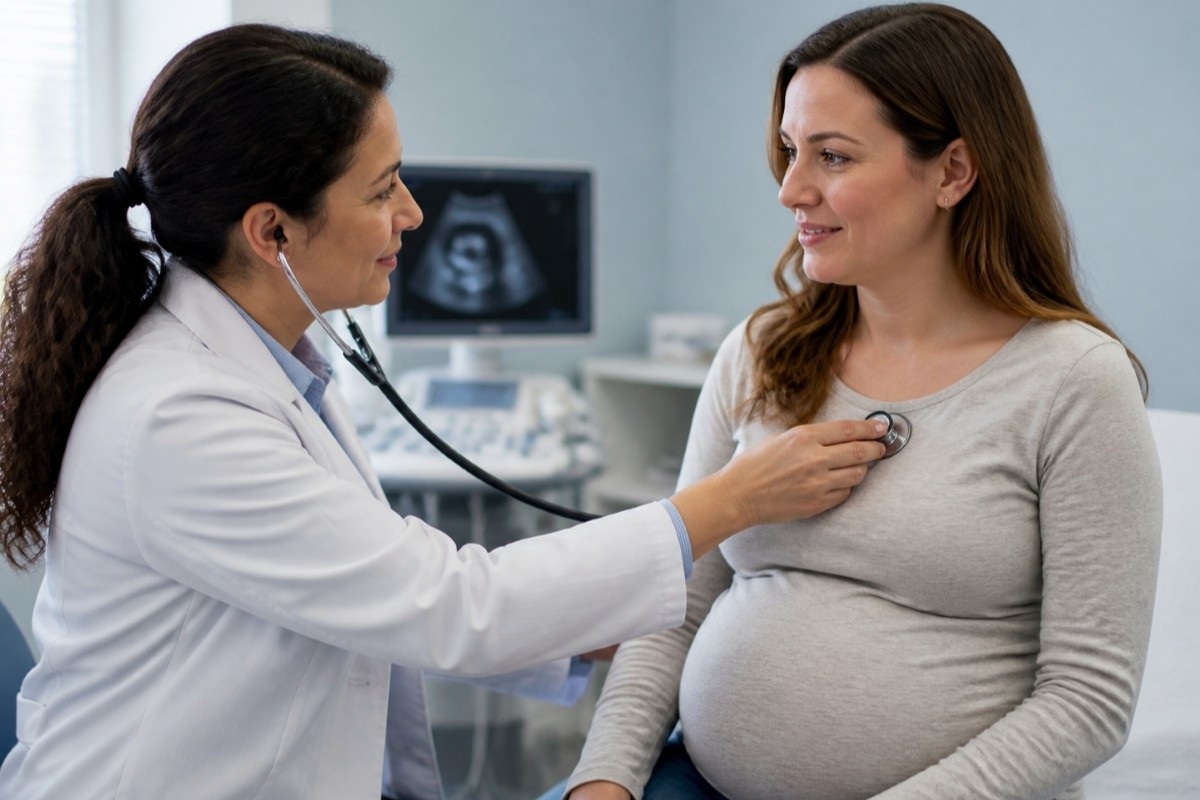
Pregnancy asks more of your cardiovascular system than it will at almost any other time in your life. Your blood volume rises sharply to supply the placenta, your heart pumps more blood with every beat, and your blood vessels relax to keep pressure steady. Those changes begin in the first trimester and peak in the middle of the second. Most healthy hearts adapt without trouble. But the same shifts can unmask a heart problem that was quiet before pregnancy, or make an existing one harder to manage.
Is a higher resting heart rate normal in pregnancy?
Yes. A resting heart rate that climbs by roughly 10 to 20 beats per minute is one of the most predictable changes of pregnancy. If your baseline resting heart rate sat in the 60s, seeing your heart rate in the 80s on a fitness tracker is expected rather than alarming. The rise builds gradually and stays with you until after delivery.
How it behaves matters more than the number. A rate that jumps suddenly, stays high while you are sitting still, or comes with lightheadedness is worth reporting.
Are heart palpitations normal during pregnancy?
Brief flutters, skipped beats, or a pounding sensation when you stand up quickly are common and usually harmless. They show up more in the second half of pregnancy, when your heart is working hardest, and often worsen with caffeine, dehydration, anemia, or an overactive thyroid. Those last two are treatable causes worth checking. Call your provider if palpitations last more than a few minutes, come with chest pain or fainting, or wake you from sleep.
What chest pain during pregnancy can mean
Most chest discomfort in pregnancy is not the heart. Reflux leads the list, since pregnancy hormones relax the valve at the top of the stomach while a growing uterus pushes upward. Rib and muscle strain from a shifting ribcage comes second.