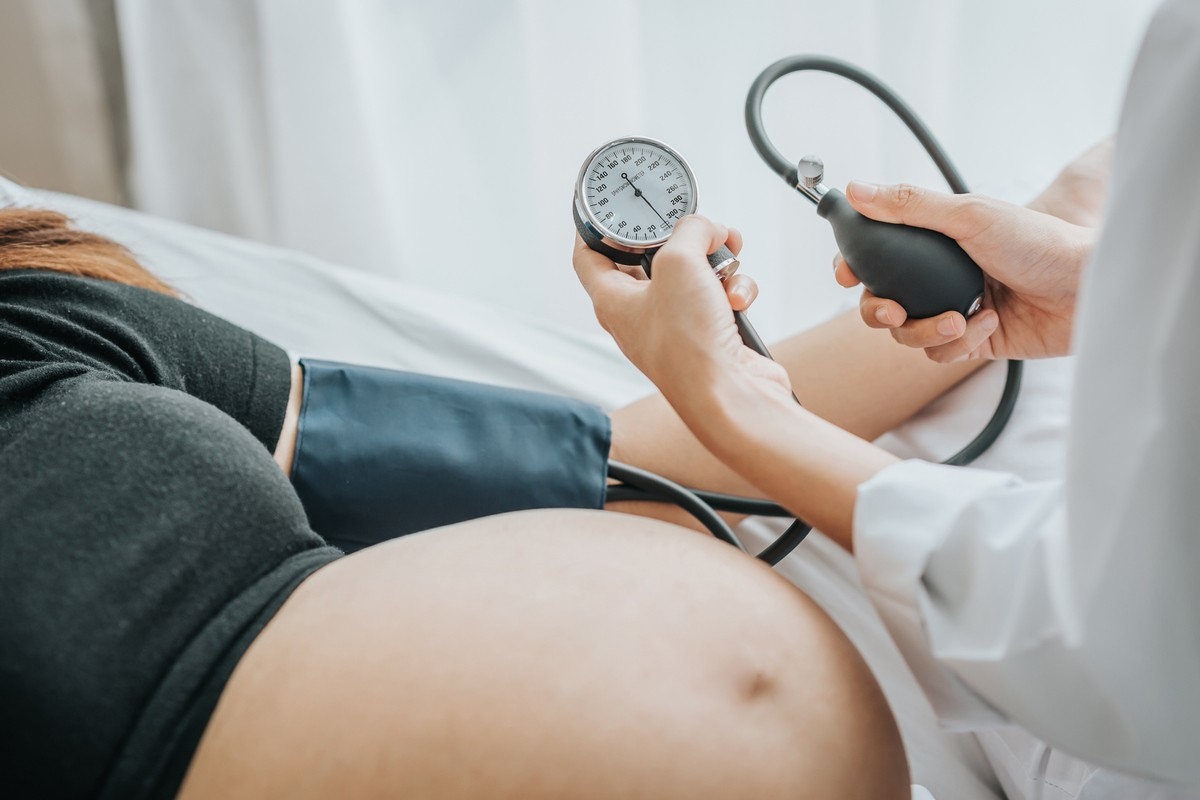
Gestational hypertension is high blood pressure that develops after 20 weeks of pregnancy in women who had normal blood pressure before. It affects about 6–8% of pregnancies in the United States. Unlike preeclampsia, gestational hypertension does not include protein in the urine or signs of organ damage. Still, it requires close monitoring because it can progress to more serious conditions and affect both mom and baby.
What Counts as High Blood Pressure in Pregnancy
A normal blood pressure reading is below 120/80. Providers diagnose gestational hypertension when blood pressure reaches 140/90 or higher on two separate readings, taken at least four hours apart, after the 20-week mark. Readings of 160/110 or higher are considered too high and warrant urgent attention. Your provider will check your blood pressure at every prenatal visit, which is one reason regular appointments matter so much during pregnancy.
Risk Factors to Know About
Some women are more likely to develop gestational hypertension than others. Risk factors include being pregnant for the first time, carrying twins or multiples, being over age 35, having a family history of pregnancy-related high blood pressure, or living with obesity, diabetes, or kidney disease. Women who had high blood pressure in a previous pregnancy also face higher odds of it returning.