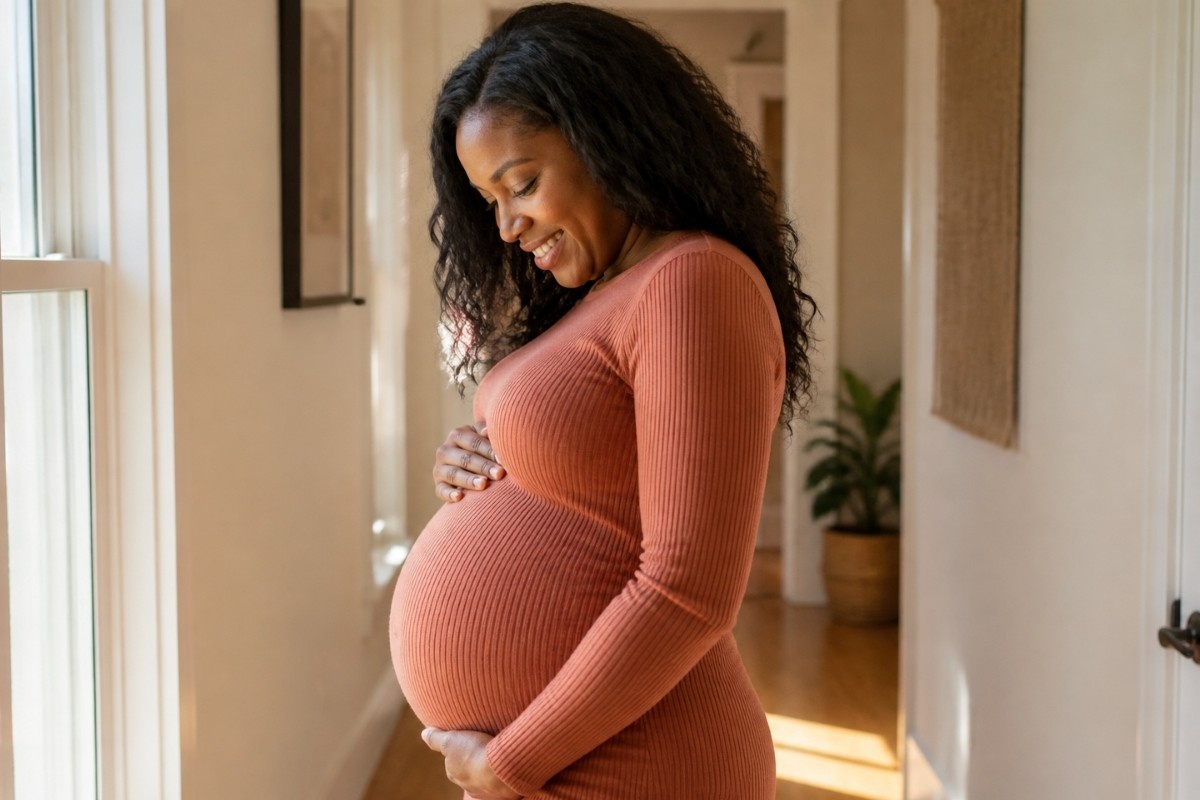
Pregnancy weight gain is the expected, healthy increase in body weight that supports a growing baby. It is not extra fat to be shed. Most of it is the baby, the placenta, amniotic fluid, a larger uterus and breasts, and a big jump in blood volume. How much you should gain depends mostly on where your weight started, and the right number looks different for every woman. Weight is one of many things we track at each prenatal visit in 2026, and we would rather you understand the trend than worry about the scale.
How much weight to gain in pregnancy by BMI
The general targets are based on your body mass index (BMI) before pregnancy. Women who start at a normal weight are usually advised to gain about 25 to 35 pounds. Women who start underweight are encouraged to gain a bit more, roughly 28 to 40 pounds. Women who start overweight are often advised to gain 15 to 25 pounds, and women with obesity about 11 to 20 pounds. If you are carrying twins, the weight targets are higher across the board.
These are ranges, not pass or fail scores. Your provider will personalize them based on your health history and how your baby is growing on ultrasound.
When do you gain pregnancy weight?
Very little happens in the first trimester. Many women gain only a pound or two, and some lose a little from nausea. That is normal as long as you are staying hydrated.
Most gain happens in the second and third trimesters, usually around a half pound to one pound per week. The pace matters more than any single weigh-in. A sudden jump of several pounds in a week, especially with swelling in your face and hands, is something we want to hear about right away because it can be a sign of a blood pressure problem.