Gestational diabetes is high blood sugar that develops during pregnancy in women who did not have diabetes before. The placenta produces hormones that make your cells less responsive to insulin. Most of the time the pancreas compensates by making more. When it cannot keep up, glucose builds in the bloodstream, and routine screening can show this between 24 and 28 weeks.
A diagnosis doesn’t mean you did anything wrong. Genetics, age, family history, and how your particular placenta behaves all play a part, and plenty of women who eat well and stay active get it anyway.
Does gestational diabetes make you high risk?
It moves your pregnancy into the higher-risk category, which mostly means closer monitoring rather than worse odds. Blood sugar above target sends extra glucose across the placenta, and your baby responds by producing more insulin, which drives growth. That is what raises the chance of a larger baby, a harder delivery, a cesarean, and low blood sugar in your newborn during the first hours after birth. Gestational diabetes also increases your own risk of preeclampsia.
Those risks drop substantially once blood sugar is controlled. Well-managed gestational diabetes looks far closer to a typical pregnancy than an untreated one does.
What happens in the first two weeks
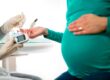
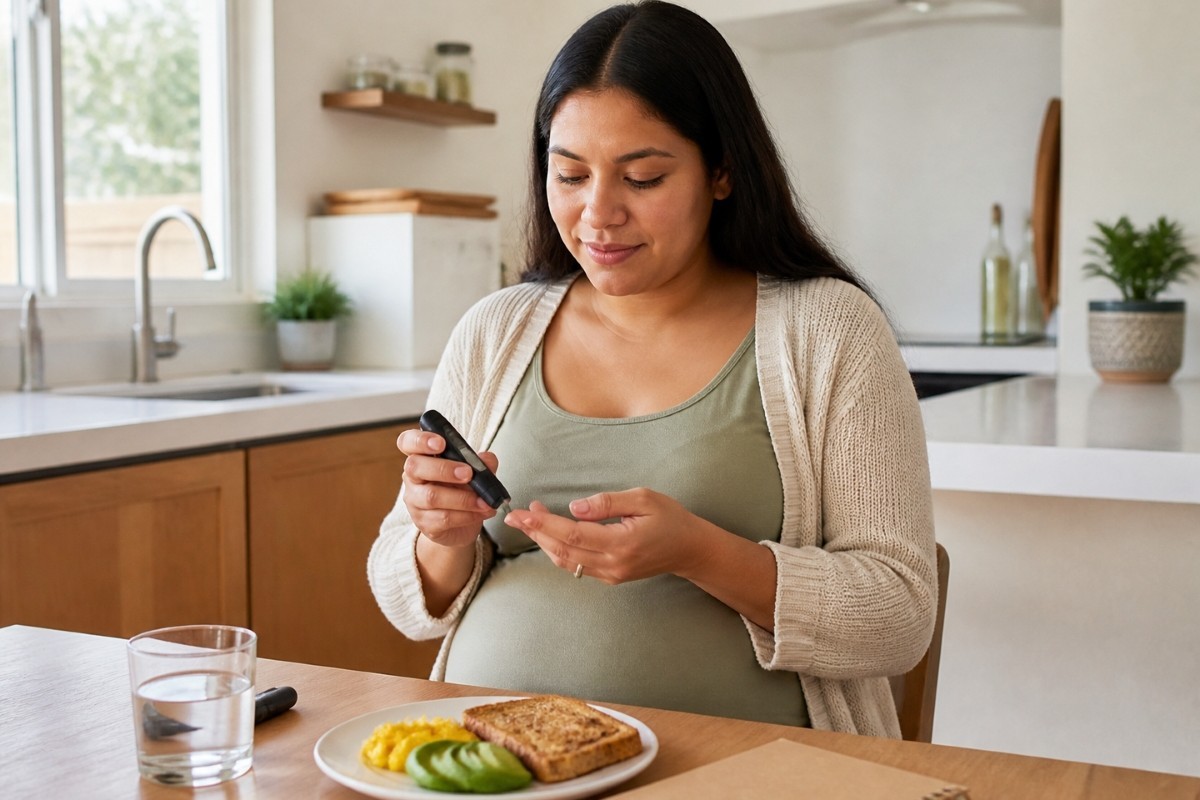
Expect three things. You will get a glucose meter and instructions to test after fasting, first thing in the morning, and again after each meal. You will meet with someone who walks you through what to eat. And your visits will get more frequent, often adding growth ultrasounds later to track your baby’s size.
Your provider will give you specific target numbers, since targets differ depending on when the reading is taken. Log your results or use the meter’s app. Patterns across a week tell your team more than any single number.
What to eat with gestational diabetes
The goal is not cutting carbohydrates out. Your baby needs them. The goal is spreading them across the day and pairing them so glucose enters your bloodstream gradually.