Vaginal health depends heavily on a bacterial ecosystem called the vaginal microbiome. In most women, a healthy vaginal pH is between 3.8 and 4.5. That acidity is what discourages the overgrowth of yeast and the bacteria involved in bacterial vaginosis. Diet is one of several factors that influence this system, alongside hormones, medications, and hygiene habits.
Food is not a cure for infections, and no eating plan replaces treatment when something is wrong. But several connections between diet and vulvar and vaginal health are well supported, and a few popular claims are not.
Blood Sugar Is the Strongest Link
The clearest diet connection is glucose control. Poorly controlled diabetes is an established risk factor for recurrent yeast infections, because elevated blood sugar creates favorable conditions for Candida overgrowth. If you are getting yeast infections repeatedly, screening for diabetes is a reasonable step.
For women without diabetes, the evidence that blood sugar alone causes yeast infections is much weaker than the internet suggests. Still, meals built around fiber, protein, and healthy fats keep blood sugar steadier than meals built around refined carbohydrates, and that is worth doing for many reasons.
Probiotic and Fermented Foods
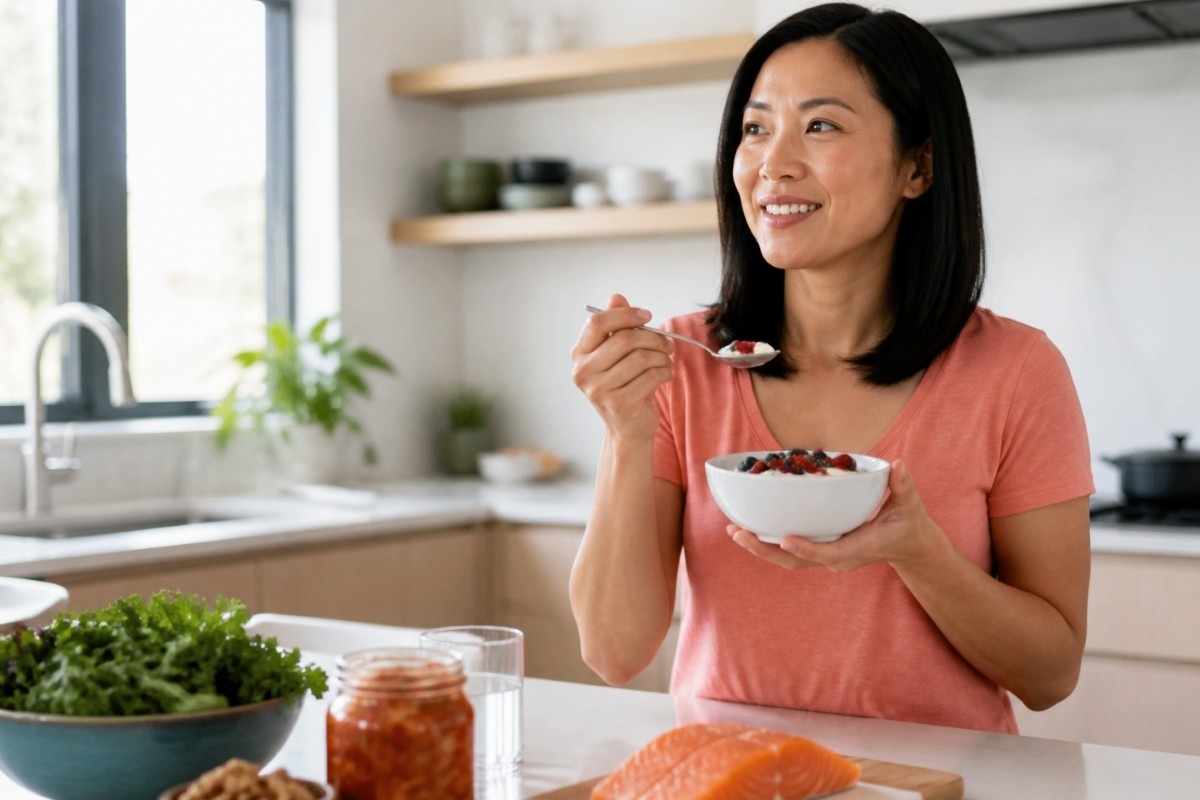
Yogurt with live active cultures, kefir, sauerkraut, kimchi, miso, and tempeh supply Lactobacillus species to your gut. Research on whether oral probiotics prevent bacterial vaginosis and yeast infections is promising but not conclusive, and results vary by strain. Some women find a clear benefit and others notice nothing.
That makes fermented foods worth including rather than worth counting on. If you are prone to recurrent infections, talk with your provider about strains with actual data behind them instead of picking a supplement off a shelf.
Fiber, Hydration, and Tissue Support
Fiber does two useful things. It supports regular bowel movements, and chronic constipation contributes to pelvic floor strain and discomfort. It also plays a role in how your body clears estrogen through the gut. Aim for vegetables, fruit, beans, and whole grains across the day rather than one large salad.