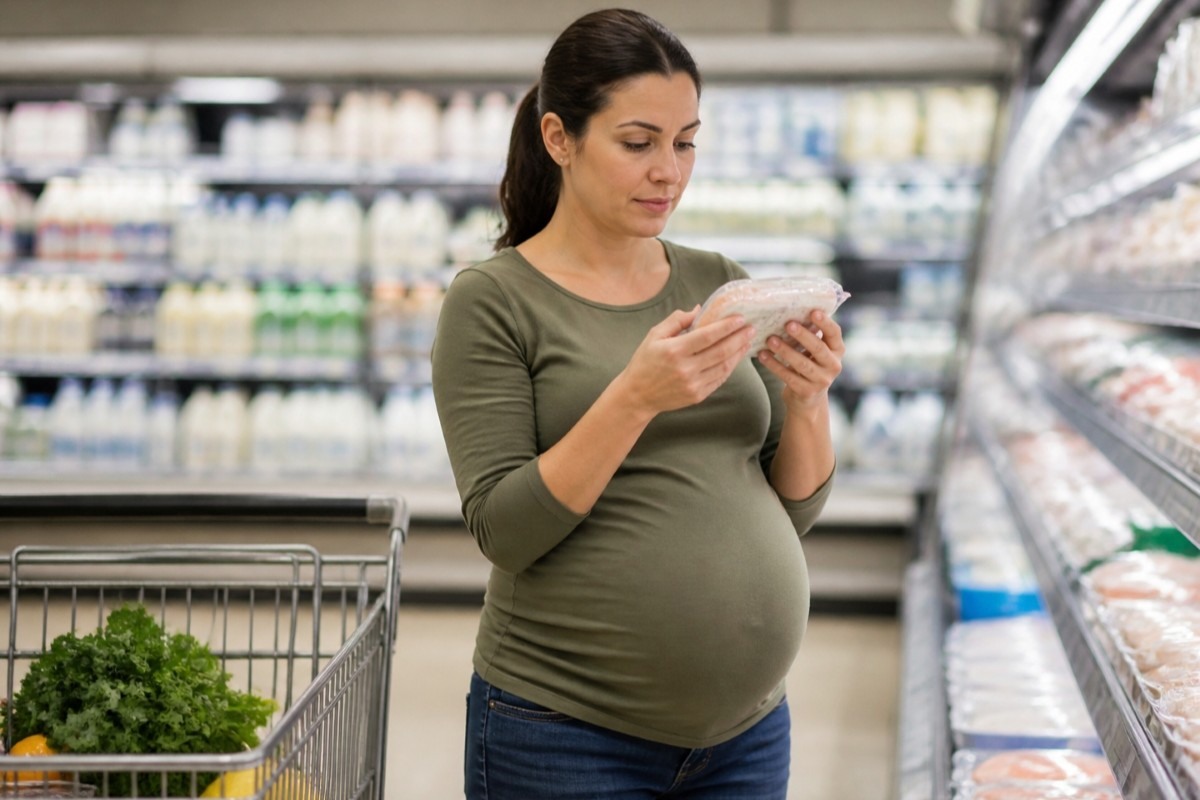
Food safety guidance during pregnancy exists for two reasons: certain infections cross the placenta, and certain contaminants affect fetal brain development. Pregnancy changes your immune system in ways that make you more vulnerable to foodborne illness. The CDC estimates pregnant women are about 10 times more likely than the general population to get listeriosis, an infection that can cause miscarriage, stillbirth, and severe illness in newborns even when the mother feels only mildly sick.
That is the actual reason behind the list. It is also why the list is shorter than the internet makes it seem.
Fish: The Nuance Most Guides Skip
High-mercury fish should be avoided entirely: shark, swordfish, king mackerel, tilefish from the Gulf of Mexico, bigeye tuna, marlin, and orange roughy. Mercury accumulates in these long-lived predators and affects your baby’s developing nervous system.
Here is what usually gets lost. The FDA and EPA recommend that pregnant women eat eight to 12 ounces of lower-mercury fish per week, which is two to three servings. Salmon, sardines, shrimp, cod, tilapia, catfish, pollock, and canned light tuna are all on the best choices list. Fish supplies omega-3 fats important for fetal brain and eye development, and eating too little is its own problem. Albacore or white tuna is the middle ground, limited to about 6 ounces per week.
Raw fish, including sushi with raw seafood, ceviche, and refrigerated smoked salmon or lox, should wait. Cooked rolls and fully cooked seafood are fine.
The Listeria List
Listeria survives refrigeration, which is why chilled ready-to-eat foods carry the risk:
- Unpasteurized (raw) milk and any soft cheese made from it, including queso fresco, queso blanco, brie, camembert, feta, and blue cheese. Check the label. If it says pasteurized, it is fine.
- Deli meats, cold cuts, and hot dogs, unless heated until steaming hot, about 165 degrees Fahrenheit. A hot pressed sandwich or a grilled hot dog is safe.
- Refrigerated pâtés and meat spreads, and refrigerated smoked seafood
- Pre-made deli salads such as chicken, egg, or seafood salad from a counter
- Raw sprouts of any kind, which are difficult to clean and have caused repeated outbreaks
Wash produce thoroughly, and treat pre-cut melon as more perishable than it looks.