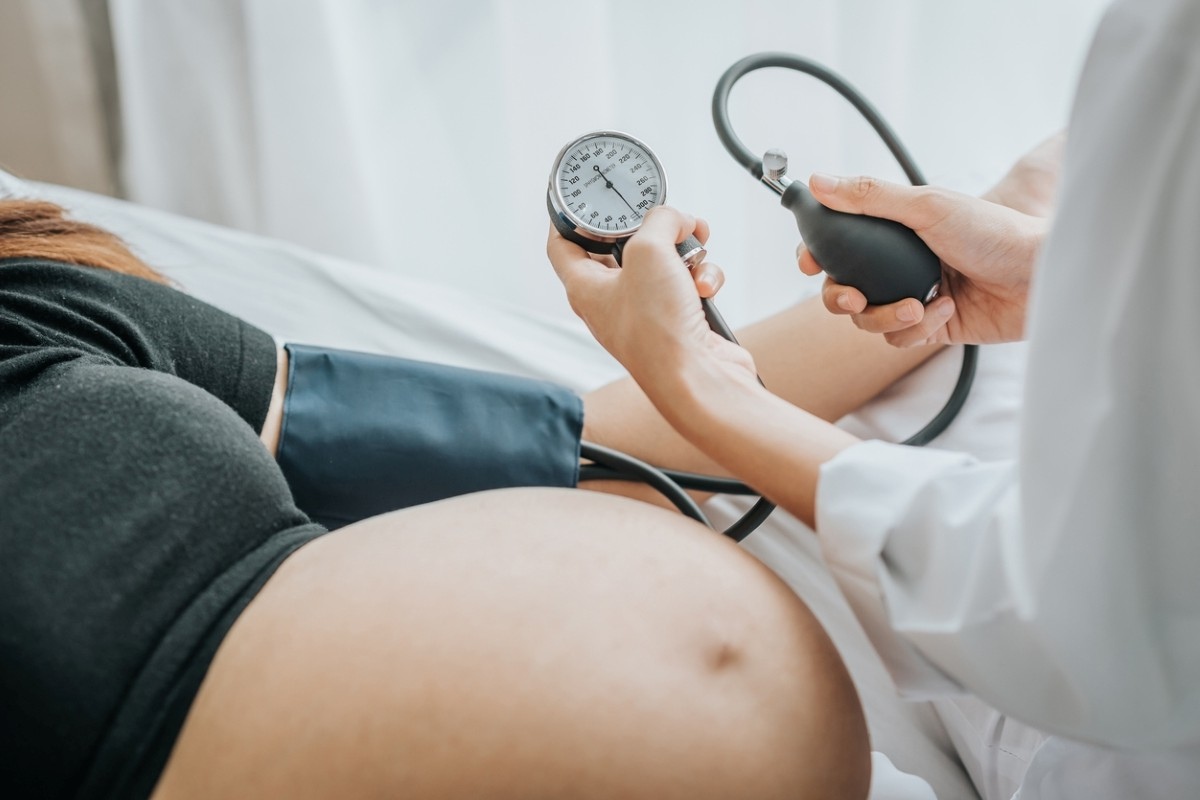
Being diagnosed with high blood pressure doesn’t mean you can’t have a healthy pregnancy. Your pregnancy will require more monitoring and care, potentially from a specialist, but safe outcomes for both you and your baby are absolutely possible with the right support.
What Is High Blood Pressure in Pregnancy?
Blood pressure is a measure of the force of your blood against the walls of your arteries. A normal reading is typically around 120/80 mmHg. High blood pressure, or hypertension, means the pressure is consistently above normal, often over 140/90 mmHg.
During pregnancy, hypertension can fall into a few different categories:
- Chronic hypertension: High blood pressure that existed before pregnancy or is diagnosed before 20 weeks.
- Gestational hypertension: High blood pressure that develops after 20 weeks but without signs of organ damage.
- Preeclampsia: A more serious condition that includes high blood pressure plus signs of damage to organs, often the kidneys or liver.
- Superimposed preeclampsia: When someone with chronic hypertension develops preeclampsia during pregnancy.
Each type requires its own monitoring approach, but all fall under the umbrella of high-risk pregnancies.
How Can High Blood Pressure Affect My Pregnancy?
If you’re pregnant with high blood pressure, it is incredibly important to be closely monitored by your provider. Uncontrolled hypertension can increase the risk of:
- Preeclampsia: A dangerous condition that can lead to seizures, stroke, or organ failure if left untreated.
- Placental abruption: A condition where the placenta separates from the uterine wall too early, which can be life-threatening for both mother and baby.
- Preterm birth: High blood pressure may lead to early delivery to prevent more serious complications.
- Fetal Growth Restriction (FGR): Poor blood flow to the placenta may slow the baby’s growth.
- Low birth weight: Babies born early or with growth restriction may weigh less than 5.5 pounds.
The good news is that with regular prenatal care, proper treatment, and additional monitoring as required, these outcomes can often be prevented or managed.