Hormonal shifts are a normal part of being a woman, but that does not make the visible changes any less frustrating. Hair loss, acne flare-ups, and skin changes are common complaints tied to fluctuations in estrogen, progesterone, testosterone, and thyroid hormones.
These shifts happen most often during the postpartum period, perimenopause, and in women living with polycystic ovary syndrome (PCOS). The good news is that many of these changes are temporary, and your OB-GYN can help you understand these changes.
Postpartum Hair Loss and Skin Changes
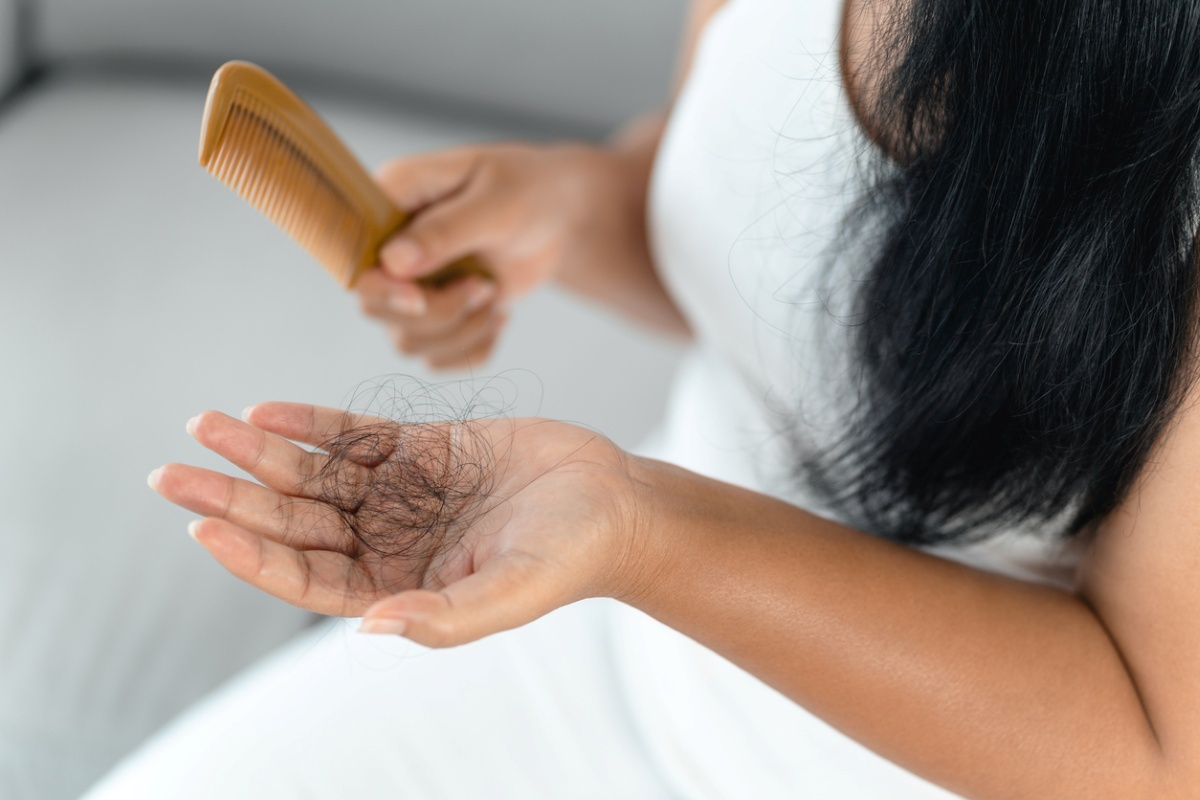
Many new moms notice their hair falling out in clumps around three to six months after delivery. This type of hair loss is called telogen effluvium, and it happens because of the dramatic drop in estrogen that occurs after birth. During pregnancy, elevated estrogen keeps hair in its growth phase longer than usual, which is why many women enjoy thicker hair while pregnant. Once those hormone levels fall after delivery, all that extra hair sheds at once.
Postpartum skin changes are common too. Some women develop acne for the first time, while others notice dark patches called melasma. These appear during pregnancy and may stick around longer than expected. Hormonal fluctuations after delivery and during breastfeeding can cause skin issues for several months.
The reassuring news is that postpartum hair loss almost always resolves on its own within a year. Eating a balanced diet rich in protein, iron, and biotin can support healthy regrowth. If your hair loss seems excessive or is not improving after 12 months, it is worth discussing with your provider, as thyroid disorders and nutritional deficiencies can also cause hair thinning and are easily tested with bloodwork.
How Perimenopause Affects Hair and Skin
As women approach menopause, declining estrogen and progesterone levels create another wave of visible changes. Hair may become thinner overall, particularly at the crown and temples. Some women also notice increased facial hair growth as the balance between estrogen and androgens shifts.