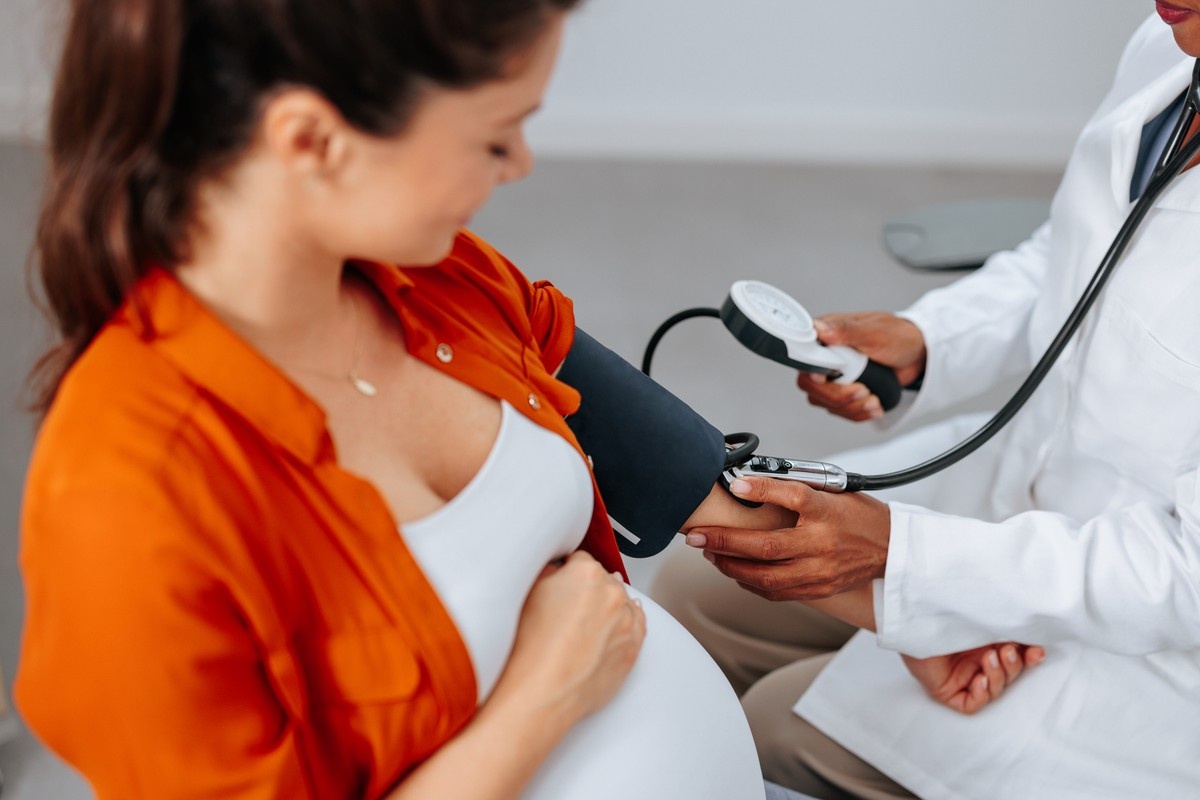
Pregnancy changes your body in major ways, including how your heart and blood vessels work. During pregnancy, blood volume increases, your heart works harder, and your blood pressure can shift from trimester to trimester. For many people, blood pressure stays in a healthy range. For others, it rises and needs close attention.
High blood pressure during pregnancy can present risks because it can reduce blood flow to the placenta. When blood flow is reduced, the baby may not get enough oxygen and nutrients. In more serious cases, high blood pressure can signal a condition like preeclampsia, which requires prompt medical care.
What counts as high blood pressure in pregnancy?
Blood pressure is recorded as two numbers: systolic (top) and diastolic (bottom). In pregnancy, providers watch for readings that are consistently 140/90 or higher.
High blood pressure in pregnancy can show up in a few different ways. Chronic hypertension means high blood pressure existed before pregnancy or appears before 20 weeks’ gestation. Gestational hypertension means blood pressure rises after 20 weeks of gestation, but there are no clear signs that organs are being affected.
Preeclampsia is high blood pressure after 20 weeks plus signs that the condition is impacting organs–often the kidneys or liver. Postpartum preeclampsia is preeclampsia that develops after delivery. This can happen even if blood pressure during pregnancy seems normal.
Gestational hypertension vs. preeclampsia
These terms sound similar, but the difference is important.
Gestational hypertension happens when blood pressure is elevated after 20 weeks without clear signs of organ involvement. Some patients remain stable with monitoring, while others go on to develop preeclampsia. That is why medical follow-up is important, even when symptoms feel mild or absent.
Preeclampsia is more than high blood pressure. It can affect the kidneys, liver, blood platelets, brain, and other systems. It can range from mild to severe, and it can progress quickly in some pregnancies.
Why blood pressure problems can be risky
High blood pressure and preeclampsia can raise the risk of complications for both parent and baby. One concern is reduced blood flow to the placenta, which may affect oxygen and nutrient delivery to the baby. This can contribute to slower fetal growth in some pregnancies.
Blood pressure complications can also increase the chance of needing to deliver earlier than planned. In more serious cases, complications like placental abruption can occur when the placenta separates from the wall of the uterus too early.
When preeclampsia becomes severe, it can affect the brain and raise the risk of seizures (called eclampsia). Severe high blood pressure can also increase the risk of stroke and other organ complications. The goal of prenatal care is early detection and timely intervention to prevent these complications.
Symptoms you should not ignore
Some people with high blood pressure feel completely normal. That is one reason routine prenatal checks are crucial. Still, certain symptoms can be warning signs, especially in the second half of pregnancy.